Crossing Edges
Lesson 3: The Silence That Spoke
How do you send a message faster than sound?
ES: “You’ve watched two civilizations solve the Distance Problem with their hands. Wood and skin in West Africa. Fire and metal in the Philippines. Both answers were brilliant. Both were local — built from what the land provided, shaped by the culture that needed them.
“This lesson takes you somewhere different.
“Not a village. Not a kingdom. A nation at war with itself — and with half of Europe. A government so desperate for speed that it commissioned an engineer to solve the Distance Problem not for a community, not for a court, but for an entire country. All at once.”
Chappe telegraph semaphore network trunk lines. Paris to Lille in red. Skirmishes with enemies at the border.
ES: “What they built covered five thousand kilometers and five hundred towers. It could carry a message from Paris to the Spanish border — over seven hundred kilometers — in under twenty minutes.
“In 1794.
“No electricity. No wire. No radio. Nothing moving but light and wood and the arms of men who had memorized a code they were forbidden to fully understand.”
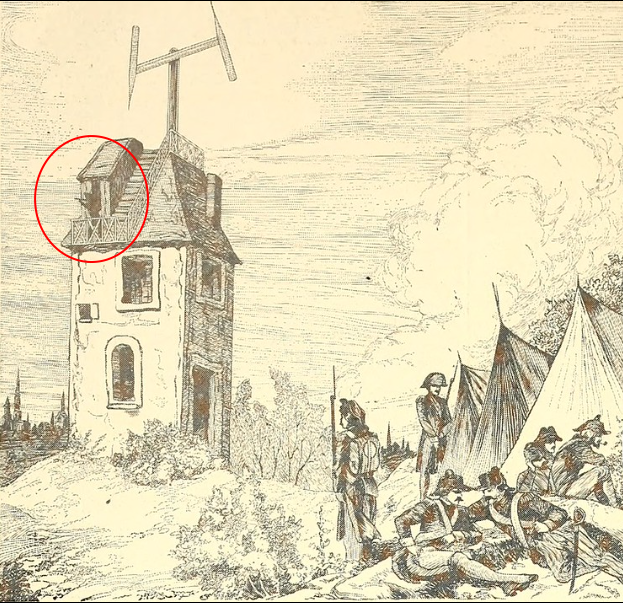
A Chappe tower. The regulator arm can rotate. The two indicator arms follow. A precise configuration. Hold. Then another. And another. Methodical. Deliberate. A sentence written in geometry, traveling at the speed of sight.
ES: “Before you go further — here’s the question I want you to carry through this entire lesson. Don’t answer it yet. Just hold it.
“What’s the difference between a communication system and a surveillance system — and does the builder get to decide?
“You’ll know the answer by the time this lesson is done. But only if you follow all three paths.”
“Three paths. But not in the same order as before. And that change is itself a lesson.”
ES: “In Lessons 1 and 2, we started with the materials — because the dundun and the gandingan were shaped by what the land could provide. The technology followed the materials.
“This time, the materials followed a crisis. So we start where Chappe started: with a country coming apart at the seams, a government that needed something it didn’t have, and an engineer who showed up at exactly the right moment.
 “The Cultural Systems Path first — because without the crisis, there is no telegraph. Follow the story of what France needed and why nothing else was fast enough.
 “Then the Material Science Path — because once you understand the need, you’re ready to ask the harder question: what exactly did Chappe build, and why did every choice he made come down to the same brutal constraint?
 “And finally the Transformational Impact Path — where you’ll find out what happened to the towers, the operators, the inventor, and the idea. Where you’ll discover that the Chappe telegraph didn’t just solve the Distance Problem. It became the blueprint for every communication network that followed — including the one in your pocket right now.”
ES: “One more thing before you go.
“The dundun player was a musician who could also carry a message. The gandingan player was part of an ensemble, part of a community.
“The Chappe telegraph operator was a civil servant. A state employee. He sat in a tower on a hilltop, relayed numbers he often couldn’t decode, and was forbidden to know what he was saying.
ES: “Ask yourself — before you read a single word — whether that sounds like a communication system to you. Or something else.
“Write that down. We’ll come back to it.”
“The Crossing Edges’ question for this lesson: What’s the difference between a communication system and a surveillance system — and does the builder get to decide?
“The expedition continues.”
Next, Select the Cultural Systems Path.