Crossing Edges
Lesson 3: The Silence That Spoke
How do you send a message faster than sound?
Transformational Impact Path
ES: “You’ve followed this system from the crisis that built it to the physics that shaped it. You know what it was made of, how it worked, why it was brilliant, and where it broke.
“Now the hardest question in this expedition so far.
“What happens to a technology — and to the people inside it — when something better arrives?
“Not ‘the old thing gets replaced.’ That’s the surface. Underneath: who decided it was obsolete? Who benefited from the replacement? Who paid the price? And what did the old system leave behind — in the infrastructure, in the institutions, in the ideas — that the new system was built on without acknowledgment?
You’ve run this analysis before. Lesson 1. Lesson 2. You named it both times — the Crossing Edges’ Lens. Material science story. Cultural systems story. Transformational impact story. Possibility meeting need through a decision that changes everything. You’re running it again right now, on a different technology, in a different century. The Lens doesn’t care. It works on all of them.
“You’ve been carrying the Crossing Edges’ Question since the Expedition Base: what’s the difference between a communication system and a surveillance system — and does the builder get to decide?
“This path is where you answer it. But not before you’ve earned the answer.
“Three things to carry in:
“First — Claude Chappe did not live to see his system replaced. What happened to him, and why, tells you something important about the cost of being the person who solves a problem the state needs solved.
“Second — the 1836 scandal did not destroy the Chappe telegraph. Something else did. And the timing of what replaced it is not a coincidence.
“Third — the electric telegraph that replaced the Chappe system didn’t start from nothing. It started from the Chappe network — its routes, its towers, its institutional knowledge, its operators. The new system was built on the bones of the old one. The people inside the old one were not invited to the new one.
“Before we go in — write down your answer to this: When a technology becomes obsolete, what obligations — if any — does the institution that replaced it have to the people who ran it?”
[Write your response here]
ES: “Let’s finish this.”
Activity 1: The Inventor’s End
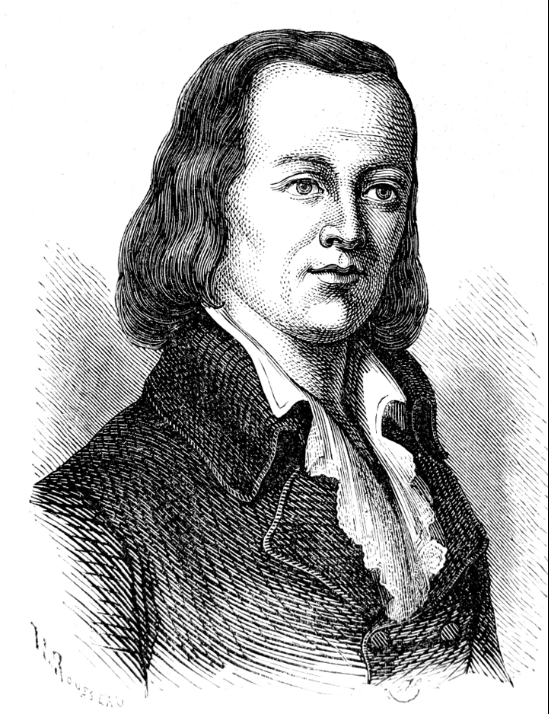
ES: “Claude Chappe was 30 years old when his system carried its first operational military message. He was 36 when the network stretched from Paris to Brest. He was the most important communications engineer in the world, and he worked for a government that changed its character — and its leadership — roughly every four years.
“Before we go in — write down your answer to this: What are the risks of building something indispensable for a government that is itself unstable? What happens to you when the government changes?”
[Write your response here]
READING: Claude Chappe — The Weight of the System
The Inventor and the State
Claude Chappe’s relationship with the French state was the central fact of his professional life — and ultimately of his death.
He had built something the government needed. But “the government” was not a stable entity in revolutionary and post-revolutionary France. The Legislative Assembly that first received Chappe’s proposals became the National Convention. The Convention became the Directory. The Directory became the Consulate. The Consulate became the Empire. Each transition brought new priorities, new administrators, and new claimants on the telegraph system’s budget, patronage, and credit.
Chappe navigated these transitions with the help of his brother Ignace, who had political connections that predated the revolution and survived its successive phases. But political protection was not the same as institutional security. The telegraph was now a state institution — the Administration des télégraphes — and Chappe was its engineer-director. He was an employee of a state that owned what he had built.
Priority Disputes
Beginning in the late 1790s, Chappe faced a series of challenges to his claim as the system’s inventor. Rival claimants argued that earlier optical telegraph proposals — some French, some foreign — had priority over Chappe’s design. The disputes were partly technical, partly political, and partly personal: in post-revolutionary France, the question of who deserved credit for a national institution was not a matter of history. It was a matter of pension rights, salary, and professional standing.
The disputes were exhausting and, for Chappe, deeply destabilizing. He had given his working life to the system. He had designed it, tested it, argued for it before multiple revolutionary governments, overseen its construction across hundreds of kilometers of French territory. The suggestion that the credit — and the financial recognition that came with it — might belong to someone else struck at the foundation of what he had built his identity on.
The End
On January 23, 1805, Claude Chappe died by suicide in Paris. He was 41 years old.
His death is often attributed, in historical accounts, to the accumulated weight of the priority disputes, the physical strain of managing a national infrastructure from a position of limited institutional security, and what contemporaries described as severe depression in his final years.
He left behind a system that would run for another half century. His name was attached to it — the télégraphe Chappe — but the institution had become larger than its inventor long before his death. The state that employed him mourned him appropriately and continued operating his system the following morning.
What to Do With This
Chappe’s story is not a tragedy in the simple sense — a brilliant man destroyed by a cruel system. It is more specific than that, and more instructive.
He built something indispensable for an institution that could not guarantee him security in return. He solved a problem so completely that the solution became the institution — and the institution no longer needed the solver in the same way it had needed the inventor. The priority disputes were not the cause of his difficulties. They were the form his difficulties took.
The question his story raises is not “was the system worth building.” It was. The question is: what does a society owe the people who solve its hardest problems — and what does it typically deliver?
THE MISSION
- Come Back to It
You wrote down the risks of building something indispensable for an unstable government. Now you’ve read what happened to Chappe. How accurate was your prediction? What did you anticipate? What did you miss?
[Write your response here] - Investigate: The Inventor’s Position
- What specific circumstances made Chappe’s position professionally precarious despite the success of his system?
- Why were the priority disputes so damaging — not just professionally but personally? What was actually at stake in them beyond credit?
- The reading says the institution “no longer needed the solver in the same way it needed the inventor.” What is the difference between those two roles — and why does that difference matter?
[Write your response here]
- Radical Empathy
You are Ignace Chappe — Claude’s brother, his political advocate, the man who got him access to the Legislative Assembly in 1792. It is January 24, 1805. You are writing a letter to the Administration des télégraphes the morning after Claude’s death.
You will not show grief in this letter. You are a political professional. But you will make a case — for something. For recognition, for pension, for the historical record, for something that matters.
Write the letter. One page. What do you argue for, and how do you argue it, the morning after?
[Write your response here]
- The Pattern
Chappe is not alone. The history of technology is full of inventors who built indispensable things and received incomplete recognition, inadequate compensation, or institutional displacement in return.
Research one other inventor whose story follows a similar pattern. (Suggestions if you need a starting point: Nikola Tesla, Rosalind Franklin, Philo Farnsworth, Alice Ball.) Write a paragraph: what is the common structure of these stories? Is there a pattern in who gets displaced and who doesn’t?
[Write your response here]
Activity 2: The Scandal — A Side Channel Opens
ES: “The Chappe telegraph carried the most sensitive communications in France for fifty years. Military orders. Diplomatic dispatches. Financial instructions. The contents of those messages were protected by the codebook — and the codebook was secure.
“But in 1836, an investigation revealed that the system had been leaking financial information to private investors for years.
“Not through the codebook. Through the error codes.
“Before we go in — write down your answer to this: If you couldn’t change any of the official message content, but you could control how errors were reported and corrected — what could you communicate?”
[Write your response here]
READING: The 1836 Scandal — When the Error Codes Became the Message
The Setup
In the 1830s, France had a government bond market — the rentes — and the price of government bonds in Paris moved with news from the provinces. A banker in Paris who knew the outcome of a financial decision in Lyon before the official courier arrived could buy or sell in advance of the market and profit substantially.
The Chappe telegraph could transmit that information from Lyon to Paris in minutes. But the telegraph was a state system. Private commercial traffic was forbidden. The codebook was held only at official stations. There was no legitimate way to use the telegraph for private financial communication.
Two bankers — the Blanc brothers, François and Joseph — found an illegitimate one.
The Exploit
The official Chappe transmission protocol included error-correction codes. When an operator misread a configuration, the downstream station could signal “error” and request a repeat. The upstream station would then retransmit.
The error-correction sequence had a defined structure: error signal, pause, retransmission. This structure was visible to any operator along the line — including operators who did not have access to the codebook.
The Blanc brothers bribed two operators on the Paris-Lyon line. The arrangement was simple:
The operators introduced deliberate “errors” into the traffic at agreed moments. The specific error — which configuration was “mistakenly” sent before the correction — encoded the financial signal. One configuration meant “bonds up.” Another meant “bonds down.” The correction that followed was legitimate, covering the track. The official message arrived intact at its destination. The side channel had already transmitted its payload.
An agent in Paris watched the towers from a distance. He did not need the codebook. He did not need to read the official message. He read the errors.
The Detection and Aftermath
The scheme ran for approximately two years before it was detected. Detection came not through cryptographic analysis but through a disgruntled third party — someone connected to the operation who reported it when the financial arrangement broke down.
The investigation confirmed the mechanism. The two operators were prosecuted. The Blanc brothers were tried but ultimately not convicted — French law at the time did not explicitly criminalize the misuse of government infrastructure for private gain, because the legislators who wrote the law had not imagined that the error codes could become a message.
The law was subsequently revised.
What the Scandal Revealed
The 1836 exploit is not primarily a story about corruption. It is a story about system design.
The Chappe telegraph had been designed with one security assumption at its core: that the message content, protected by the codebook, was the only meaningful channel. Error correction was administrative, not informational. No one had modeled it as a potential signal.
What the Blanc brothers demonstrated is a principle that would later become foundational in information security: a side channel is any unintended pathway through which information can leak. The official channel can be perfectly secure while a side channel carries everything the attacker needs.
The operators didn’t need to know what the official messages said. They needed to know one bit: up or down. And the system, in its design, had provided a mechanism — the error code — that could carry exactly one bit at a time, invisibly, inside legitimate traffic.
The codebook was never compromised. The system was.
THE MISSION
- Come Back to It
You wrote down what you could communicate if you controlled the error reporting without touching the message content. Now you’ve read what the Blanc brothers actually did. How close was your thinking? What did you see that they saw — and what hadn’t occurred to you?
[Write your response here] - Investigate: The Exploit
- What specific feature of the error-correction protocol made the side channel possible?
- Why was the official message unaffected by the exploit? What does this tell you about the difference between message security and system security?
- Why were the Blanc brothers not convicted — and what does the gap in the law reveal about how legislators think about technology?
[Write your response here]
- Analyze: The Side Channel Principle
The reading states: “a side channel is any unintended pathway through which information can leak.”
- Identify one side channel in a modern digital system. (Some starting points: metadata in email, timing attacks in encryption, acoustic emanations from keyboards.) Explain how it works in your own words.
- What is the common design failure that makes side channels possible — across the Chappe system and your modern example?
- Can a sufficiently well-designed system eliminate all side channels? Defend your answer.
[Write your response here]
- Revisit the Crossing Edges’ Question
You’ve now seen three things: operators who couldn’t read the messages they transmitted, a state that forbade private use of the network, and a scandal in which private information leaked anyway — not through the message but through the system.
Return to the question you’ve been carrying: What’s the difference between a communication system and a surveillance system — and does the builder get to decide?
Don’t answer it yet. Write down what you now know that you didn’t know at the Expedition Base. What new evidence do you have? What has changed in how you’re thinking about the question?
[Write your response here]
Activity 3: The Replacement — And What It Left Behind
ES: “In 1844, Samuel Morse demonstrated the electric telegraph in the United States. By 1850, electric telegraph lines were spreading across Europe. By 1855, the French government had made its decision: the Chappe system would be decommissioned. The electric telegraph would replace it.
“Look at the map. Look carefully at where the new blue, electric lines run.
“Before we go in — write down your answer to this: If you were building a new communication network across France in 1850, and a previous network already existed, what would you use from it — and what would you discard?”
[Write your response here]
READING: What the Electric Telegraph Inherited — and What It Discarded
The Routes
The electric telegraph lines that replaced the Chappe network in France followed, with remarkable fidelity, the routes the Chappe network had established over sixty years.
This was not coincidence or sentiment. The Chappe engineers had solved the route-planning problem already — they had identified the hilltop corridors, the river valley crossings, the ridge lines and passes that connected Paris to the frontiers and coasts with minimal obstruction. That knowledge was embedded in the landscape: the cleared sight lines, the access roads built to service the towers, the local administrative relationships that permitted construction on private and church land.
The electric telegraph needed wire routes, not sight lines. But wire routes and sight lines share the same underlying geography: the paths of least resistance across a landscape. The Chappe network had mapped those paths. The electric telegraph followed them.
The Towers
The towers themselves were not reused — electric telegraph wire does not require elevated anchor points at 12-kilometer intervals. But the tower sites, the hilltops and church steeples that the Chappe network had occupied for sixty years, became the locations of relay stations, junction boxes, and later telephone exchanges. The infrastructure logic — put your nodes on high ground, space them for coverage, run your routes along the watersheds — persisted even when the technology changed completely.
The Operators
The Administration des télégraphes employed several hundred trained operators at the time of the Chappe network’s decommissioning. These were men who had spent years, in some cases decades, mastering a skill — the rapid reading and reproduction of semaphore configurations — that was now worthless.
The electric telegraph required operators too. Morse code had to be sent and received. Messages had to be logged, routed, and delivered. The administrative structure of a national telegraph network was not entirely unlike the administrative structure of the Chappe system.
But the skills did not transfer. A Chappe operator who could read semaphore configurations at 12 kilometers in under three seconds had no advantage over an untrained applicant when it came to tapping a Morse key. The embodied expertise — years of training, the practiced eye, the calibrated hand — had no value in the new system.
Some operators were retrained. Many were not. The historical record of what happened to the displaced Chappe workforce is incomplete — the Administration was not required to report on individual fates, and most operators were not prominent enough to leave extensive documentary traces. What the record shows is that the transition was rapid, the retraining programs were limited, and the new electric telegraph administration hired heavily from outside the existing workforce.
The Institutional Knowledge
What the electric telegraph did inherit — partly intentionally, partly by osmosis — was the institutional knowledge of how to run a national communication network.
The Chappe system had solved problems that had no precedent: how do you staff hundreds of remote stations? How do you maintain equipment across a national network? How do you handle message priority, error correction, and security at scale? How do you train operators to a consistent standard across geography?
The Administration des télégraphes had sixty years of answers to those questions. Some of those answers were codified in manuals and procedures that the new administration inherited directly. Others were carried in the minds of senior officials who transitioned from one system to the other. Others were rediscovered independently by the electric telegraph administration — paying, again, the cost of learning what the Chappe system had already learned.
The Template
The deeper inheritance was conceptual.
The Chappe telegraph had demonstrated — for the first time in history, at national scale — that a message could be separated from its physical carrier. A letter carried a message because the letter traveled. The Chappe telegraph carried a message because a pattern traveled — a pattern that could be reproduced at each station without the original physical object moving at all. The message and the medium were decoupled.
This is the foundational insight of all subsequent communication technology. The electric telegraph extended it — replacing optical patterns with electrical pulses, but preserving the logic exactly. The telephone extended it further — replacing coded patterns with continuous signals, but preserving the logic. Radio, television, the internet, the mobile network: all of them are elaborations of the same insight, first demonstrated at national scale by a wooden semaphore on a French hilltop in 1794.
The relay towers your mobile phone signal passes through today are not descendants of the Chappe towers in any physical sense. They are descendants in every logical sense. The network in your pocket runs on an idea that Claude Chappe’s brothers carried to the Legislative Assembly in 1792.
THE MISSION
- Come Back to It
You wrote down what you would use from an existing network when building a new one. Now compare your answer to what actually happened. What did the electric telegraph inherit that you anticipated? What did it inherit that you didn’t think of?
[Write your response here] - Investigate: The Inheritance
- What specific features of the Chappe network did the electric telegraph inherit, and what was the reason for each inheritance?
- Why did operator skills not transfer, even though both systems required trained operators?
- The reading identifies the “foundational insight” that the Chappe telegraph demonstrated. State that insight in your own words. Then explain why it applies equally to a mobile phone network.
[Write your response here]
- Analyze: The Workforce Transition
The Chappe operators were displaced by a technology that built on the infrastructure their work had created — and did not employ them.
- Is this a fair outcome? Construct an argument on both sides before giving your own view.
- The reading notes that the historical record of displaced Chappe operators is incomplete. Why might that be — and what does that incompleteness tell you about whose stories get recorded?
- Connect this to a present-day parallel: name one workforce currently being displaced by a technology that depends on infrastructure or knowledge that workforce created. What obligations, if any, exist?
[Write your response here]
- Answer the Crossing Edges’ Question
You’ve been carrying this since the Expedition Base: What’s the difference between a communication system and a surveillance system — and does the builder get to decide?
You now have everything you need.
Write your answer. Not a paragraph — a proper argument. Use specific evidence from all three paths:
- The state monopoly on the network and the exclusion of private traffic
- The codebook secrecy and what operators could and couldn’t know
- The 1836 exploit and what it revealed about side channels
- The workforce displacement and what it revealed about who the system actually served
Make a claim. Defend it. Then answer the second half: does the builder get to decide what their system becomes?
Use Claude Chappe as your closing example. He built a communication system. He did not control what it was used for, who it served, or what it became. Does that make him responsible for what it was?
[Write your response here]
Transformational Impact Path — Hands-On Activity: The Inheritance Audit
What you need: Paper, pen, and access to basic research materials (a library or internet access).
What you do:
Pick one modern communication technology — a smartphone, the internet, a satellite network, a fiber optic cable system. Your task is an inheritance audit: trace backwards through the chain of technologies your chosen system depends on, and identify at least three layers of inheritance.
For each layer:
- Name the earlier technology
- Identify what specific feature or insight was inherited
- Identify what was discarded or left behind
- Identify one group of people who were displaced in the transition
Then answer: how many layers back can you get before you reach the Chappe telegraph — or something that shares its foundational logic?
What this teaches:
No technology starts from nothing. Every network is built on the bones of the network before it. The Chappe telegraph’s foundational insight — that a message can be separated from its physical carrier and transmitted as a reproducible pattern — is present in every layer of every communication technology that followed. When you trace backwards far enough, you always find it.
The harder question the audit raises: if every new technology is built on the work of people who came before — people who were often displaced by the very system that inherited their work — what does that mean for how we think about innovation, credit, and obligation?
[Write your response here]

Transformational Impact Path — Close
ES: “You started this lesson with a country at war and an engineer with a proposal. You followed that proposal from a desperate government commission to 500 towers across France. You met the operators who carried messages they couldn’t read. You watched the system get exploited through its own error codes. You watched it get replaced by something that inherited its bones and discarded its people.
“And you answered the question you’ve been carrying since the Expedition Base.
“Here’s what I want you to hold as you close this lesson.
“Claude Chappe solved the Distance Problem. Completely, brilliantly, for his time. The solution became an institution. The institution became infrastructure. The infrastructure became a template. The template became the foundation of every communication network that followed — including the relay towers your phone signal passes through right now.
“He didn’t know that. He died at 41, defending his priority claim to a system he had already given to a state that owned it.
“The dundun player in West Africa knows who they’re talking to. The gandingan master knows who their student is. Chappe built something so large that the people it was built for — and the people it was built by — disappeared inside it.
“That’s not a failure. That’s what it costs to solve a problem at civilizational scale.
“The Crossing Edges’ question was never really about the difference between communication and surveillance. It was about something harder: when a system becomes larger than any individual can see, control, or fully understand — who is responsible for what it does?
“You’ve answered it for the Chappe telegraph. Hold the answer. You’ll need it for every lesson that follows.
“This is Ven. The expedition continues.”
PARENT/TEACHER GUIDE — TRANSFORMATIONAL IMPACT PATH
Core InsightThe Chappe telegraph’s deepest legacy is not the electric telegraph it enabled — it is the foundational insight it demonstrated for the first time at national scale: that a message can be separated from its physical carrier and transmitted as a reproducible pattern. Every communication technology that followed, including the mobile networks students use today, is an elaboration of that insight. Students who finish this path understand that technological succession is not replacement — it is inheritance, partial and selective, that preserves logic while discarding people. This path exercises Radical Empathy — through Chappe’s story and the displaced operators — and Systems Thinking, as students are asked to trace inheritance chains backwards through multiple technological generations and identify what travels and what doesn’t.
Signs of Understanding
- Their Crossing Edges’ Question answer makes a specific claim — not “it depends” but a defensible position — and uses evidence from at least two of the three paths to support it
- Their analysis of the 1836 exploit correctly identifies the side channel principle and applies it to a modern example without conflating it with codebook compromise
- Their workforce transition analysis constructs a genuine argument on both sides before arriving at a view — not a one-sided verdict
- Their inheritance audit traces at least three layers and identifies a displaced workforce at each layer — not just the technology chain but the human chain inside it
Conversation Starter“Claude Chappe built the most important communication system in the world and didn’t live to see what it became. The people who ran it for fifty years were replaced by a system built on their work. Does the network in your pocket owe anything to people like that — and if it does, how would you even pay it?”